

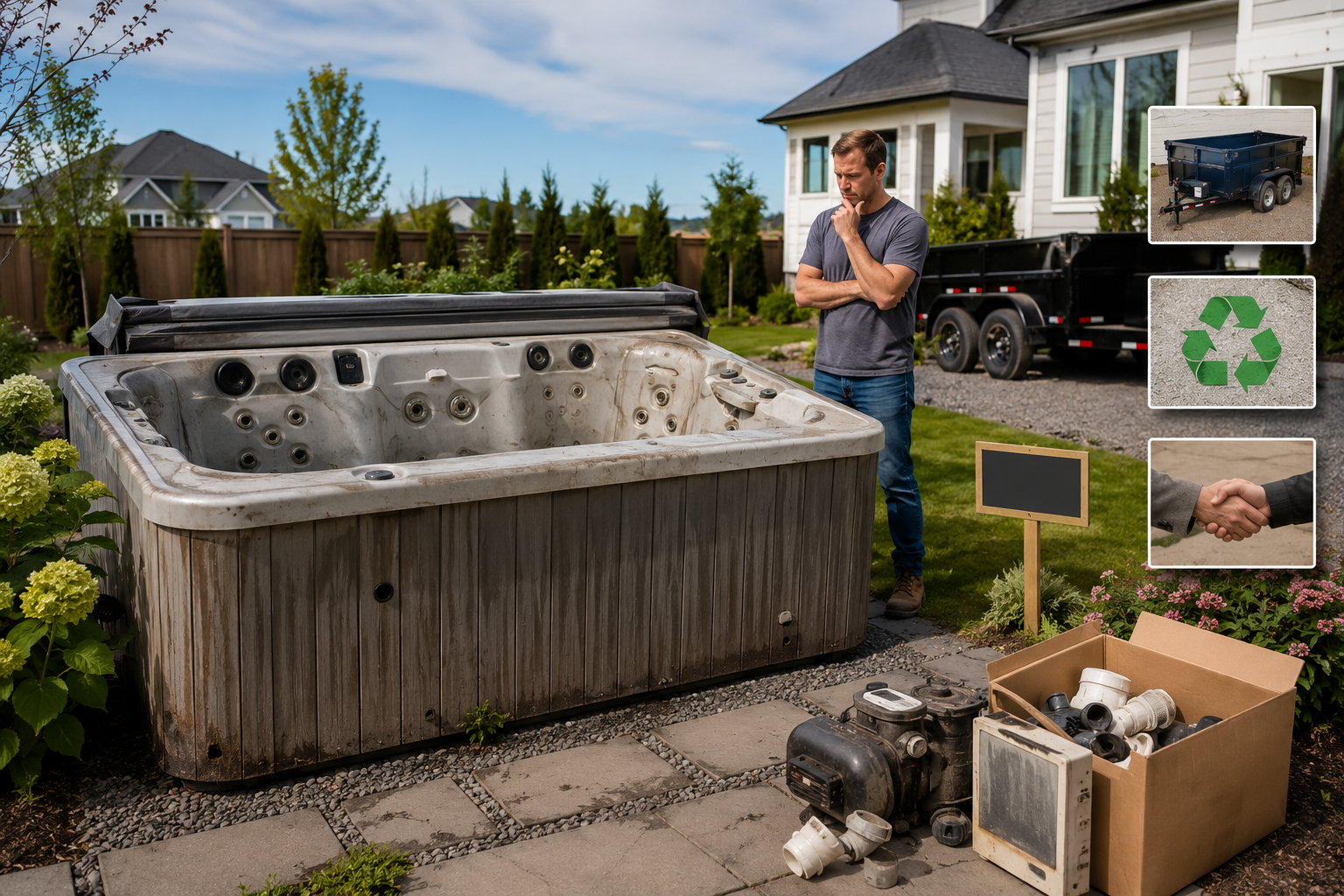
An old hot tub can go from a relaxing backyard feature to a real headache pretty quickly. Maybe the pump stopped working, the shell started leaking, or you're planning a renovation and suddenly that bulky spa is in the way. Either way, figuring out how to get rid of a hot tub isn't always straightforward, especially when most tubs weigh somewhere between 400 and 800 pounds empty.
The good news is you've got a few solid options for getting rid of a hot tub. Depending on the condition of the tub, your budget, and how much work you want to take on yourself, you may be able to sell it, donate it, salvage useful parts, tackle the removal yourself, or hire a professional [hot tub removal service]. This guide walks through each option step by step so you can choose the path that makes the most sense for your space, your schedule, and what you're comfortable handling yourself.
Know Your Options: Five Ways to Get Rid of a Hot Tub
There's no single best way to get rid of a hot tub. A working spa with easy access is very different from a cracked tub built into a deck with hardwired electrical. The right choice usually comes down to three things:
- How much time you want to spend
- How much physical work you're comfortable with
- Whether the tub still has any resale or salvage value
Here's a quick breakdown of the five most common pathways.
| Option | Best For | Cost Level | Time & Effort |
|---|---|---|---|
| Sell it | Working or near-working tubs | Low | Moderate |
| Donate it | Functional tubs in decent condition | Low | Moderate |
| Salvage parts | Broken tubs with reusable components | Low to moderate | Moderate |
| DIY removal | Homeowners comfortable with tools and hauling | Moderate | High |
| Hire a pro | Heavy, difficult, or built-in tubs | Higher upfront cost | Low effort |
Selling can work well if the tub still runs and buyers can access it easily. DIY removal usually saves money, but it's labour-intensive and takes planning. Hiring a professional is often the fastest route when stairs, decks, fencing, or electrical work are involved, especially if you want old hot tub removal handled without taking on the heavy lifting yourself.
Option 1: Sell Your Hot Tub
If the tub still works or only needs minor repairs, selling it can help offset some removal costs. This usually works best with newer tubs, well-known brands, or models that still heat properly and don't have shell damage.
Most homeowners list tubs on:
- Facebook Marketplace
- Kijiji
- Craigslist
Clear photos make a big difference. Buyers usually want to see the shell condition, control panel, cover, and equipment area before committing to pickup. It also helps to be upfront about any issues instead of trying to gloss over them.
When getting rid of a hot tub this way, access matters almost as much as condition. A buyer may lose interest quickly if the tub is squeezed behind a fence, built into a deck, or difficult to move safely.
The biggest downside is timing. Finding someone willing to haul a 400- to 800-pound hot tub can take days or even weeks, especially if the tub needs repairs. If you're on a deadline for a renovation or property sale, resale may not be the most practical option.
Option 2: Donate or Give It Away
Donation can work if the hot tub is still functional and reasonably clean, but it's not as common as people expect. Most organisations only accept tubs they can realistically reuse or resell.
Places that may occasionally accept hot tubs include:
- Habitat for Humanity ReStores
- Vocational training programmes
- Local community organisations
- Non-profit housing or recreation groups
Before promising a donation, call first and confirm their requirements. Some organisations require the donor to handle transportation, draining, and removal entirely.
If you're getting rid of an old hot tub that no longer works, donation usually isn't realistic. Most charities won't take cracked shells, failed pumps, or tubs with missing components because disposal costs become their responsibility.
Still, for a working tub in decent condition, giving it away can be a good middle ground between selling and hauling it straight to disposal.
Option 3: Salvage or Sell Components
Even if the hot tub itself is beyond saving, some of the internal components may still have value. This option works well for homeowners handling old hot tub removal where the shell is damaged, but the equipment is still usable.
Parts commonly worth salvaging include:
- Pumps
- Motors
- Heater elements
- Copper wiring
- Control boards
- Jets
You may be able to sell components through online marketplace listings, spa-repair forums, or local salvage yards. Copper and other metal parts can also be recycled separately instead of going into a landfill.
This approach takes more time than full disposal, but it can reduce waste and help offset some of the cost of getting rid of a hot tub. If you're already dismantling the tub yourself, setting reusable components aside only adds a little extra work.
Option 4: DIY Hot Tub Removal — Step-by-Step
For homeowners who are comfortable with power tools and heavy lifting, DIY removal can be a practical option. It's usually the cheapest route upfront, but it also requires the most effort.
Most DIY removals take around 4–8 hours for two people, depending on access, tub size, and how much cutting is required.
Before you start:
- Measure gates and access paths
- Confirm local disposal rules for fibreglass and acrylic.
- Arrange a truck or trailer.
- Line up at least one helper.
- Shut off the power to the tub at the breaker.
Step 1: Drain the Water
Start by fully draining the hot tub using the built-in drain plug or a submersible pump.
Don't release chemically treated water into a storm drain. In most municipalities, spa water should either be routed into a sanitary sewer connection or allowed time for chlorine and other chemicals to neutralise before draining.
If you're unsure about local disposal rules, check with your municipality before starting. It's a simple step that can help prevent fines or environmental issues later.
Step 2: Disconnect the Electrical
This is the part where safety matters most.
Turn off the breaker supplying power to the hot tub before touching any wiring. Most tubs are connected to a hardwired 240V circuit, and disconnecting that system is not considered a DIY job.
A licensed electrician should disconnect and cap the wiring safely. Depending on where you live, a permit or inspection may also be required.
Some newer heat-pump hot tubs may contain refrigerant components as well. If that's the case, refrigerant handling should be left to a certified technician.
Step 3: Gather Your Tools
Removing a hot tub takes more than a screwdriver and a pickup truck. You'll want the right demolition tools before you start cutting anything apart.
Common tools include:
- Reciprocating saw with demolition blades
- Circular saw
- Pry bars
- Sledgehammer
- Utility knife
- Heavy work gloves
- Safety glasses
- Dust mask or respirator
The reciprocating saw does most of the heavy work once it's time to cut through the shell.
Step 4: Remove Cabinet Panels
Next, remove the outer skirting or cabinet panels around the tub.
Depending on the model, the panels may be screwed into place or attached with clips. Work carefully so you don't create unnecessary sharp edges while prying pieces loose.
If the cabinet material is wood or composite, separate those materials into their own disposal pile. Some pieces may be recyclable depending on local facility rules.
Step 5: Remove Components
Once the cabinet is open, start disconnecting and removing the internal equipment.
Take out the pump, heater, jets, plumbing lines, and any exposed metal components. Removing this equipment first reduces the overall weight of the shell and makes cutting easier later.
Set recyclable metals aside separately if possible. Copper wiring, motors, and metal brackets may have scrap value depending on local recycling rates.
Step 6: Cut the Shell Into Sections
This is usually the most physically demanding part of the job.
Use a reciprocating saw to cut the acrylic and fibreglass shell into manageable sections roughly 3–4 feet wide. Smaller pieces are easier to carry safely through gates, around decks, or into a trailer.
Wear safety glasses, gloves, and a dust mask or respirator during cutting. Fibreglass dust can irritate your lungs, skin, and eyes, and the shell edges can become surprisingly sharp once cut.
Take your time here. Rushing usually creates awkward lifting angles and harder cleanup later.
Step 7: Haul and Dispose of the Pieces
Once the tub is fully dismantled, load the sections into a trailer, truck, or rented disposal bin.
Before hauling anything away, contact your local waste facility to confirm they accept fibreglass or acrylic shell material. Some landfills allow cut sections only, while others have restrictions on whole shells or oversized loads.
Metal parts should be recycled separately whenever possible. It keeps useful material out of landfill and may slightly reduce disposal fees.
DIY Honest Reality Check: Is It Worth It?
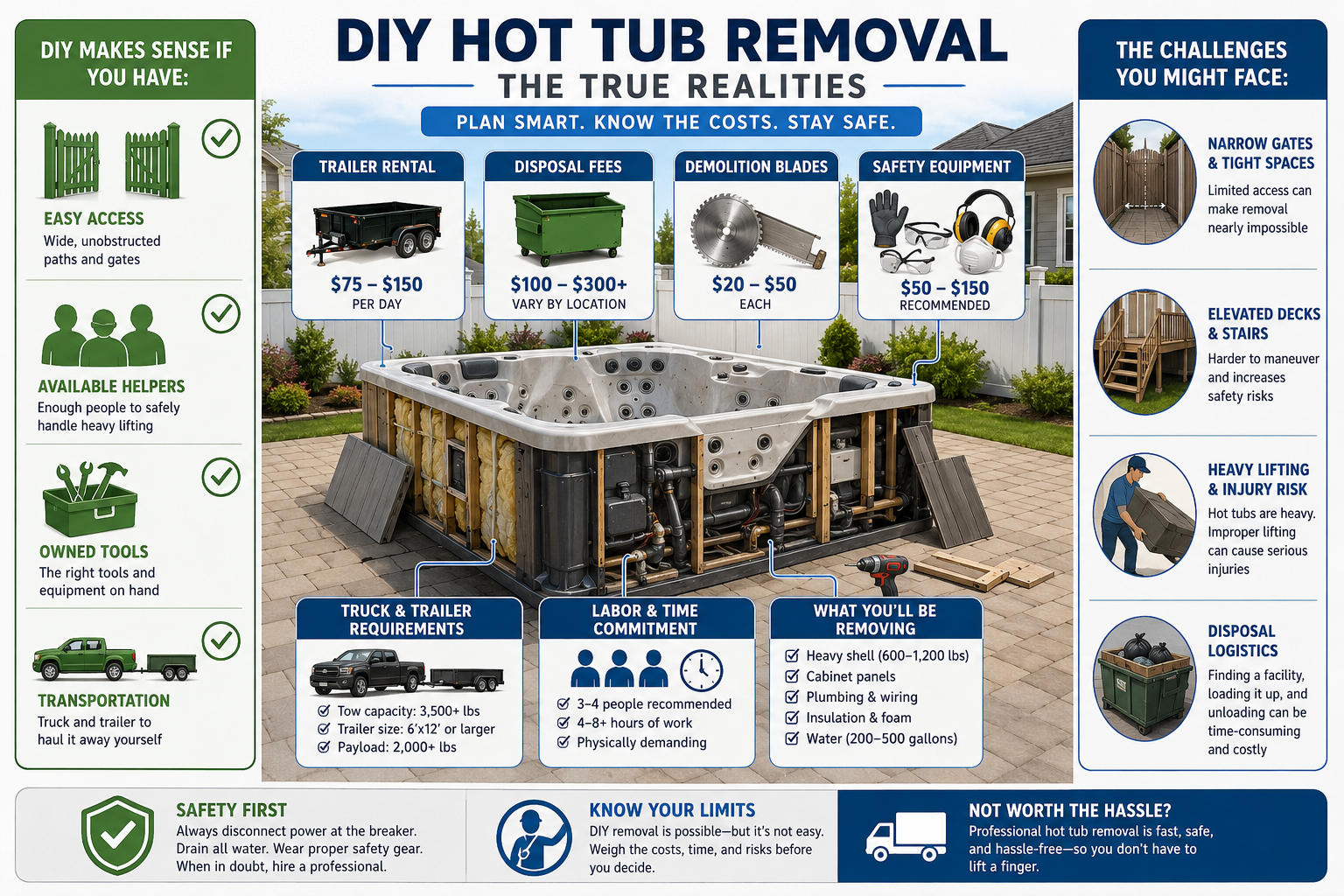
DIY hot tub removal can absolutely save money, but it's not always the bargain people expect.
By the time you factor in trailer rental, disposal fees, demolition blades, protective gear, and a full day of physical labour, the savings may end up smaller than anticipated. Getting rid of a hot tub also becomes much harder when access is tight or the tub is elevated on a deck.
DIY tends to make the most sense when:
- Access is straightforward.
- You already own the tools.
- You have help available.
- You're comfortable using power tools.
- You have a truck or trailer ready.
If you're comparing costs, checking [our pricing] before starting can help you decide whether the labour and disposal work are worth taking on yourself.
Option 5: Hire a Hot Tub Removal Professional
For many homeowners, hiring a removal company is simply the easier route.
Professional crews typically handle:
- Draining the tub
- Coordinating electrical disconnects
- Cutting the shell apart
- Hauling debris away
- Recycling metal components when possible
- Cleaning up the area afterward
The biggest advantage is convenience. Instead of spending an entire weekend dismantling and hauling debris yourself, the work is usually completed more quickly and with a lot less physical effort on your end.
Costs vary depending on:
- Tub size and weight
- Gate width and access paths
- Stairs or steep terrain
- Built-in deck surrounds
- Distance from the road or truck parking
- Whether the tub is already disconnected
If you're getting quotes for old hot tub removal, ask a few simple questions before booking:
- Are you insured?
- Do you recycle components when possible?
- How is the shell disposed of?
- Are disposal fees included?
Some homeowners also combine hot tub removal with larger property cleanups or [residential cleanouts] if they're already clearing decks, sheds, or renovation debris at the same time.
Access and Site Prep: What Removal Teams (and DIYers) Need to Know
A little prep work can make removal day much smoother, whether you're doing the job yourself or hiring a crew.
Most hot tubs won't fit through a standard gate without being cut apart first, so measuring access ahead of time matters. Stairs, muddy yards, deck surrounds, and narrow fence openings can all slow the process down.
Before removal day:
- Measure gates and pathways
- Clear furniture, planters, and obstacles
- Reserve a nearby parking space if needed
- Check the weather conditions if the yard gets muddy
- Let removal crews know about stairs or elevation changes
Good access planning usually means faster work, fewer surprises, and lower labour costs.
When to Call a Pro (and Where to Find One)
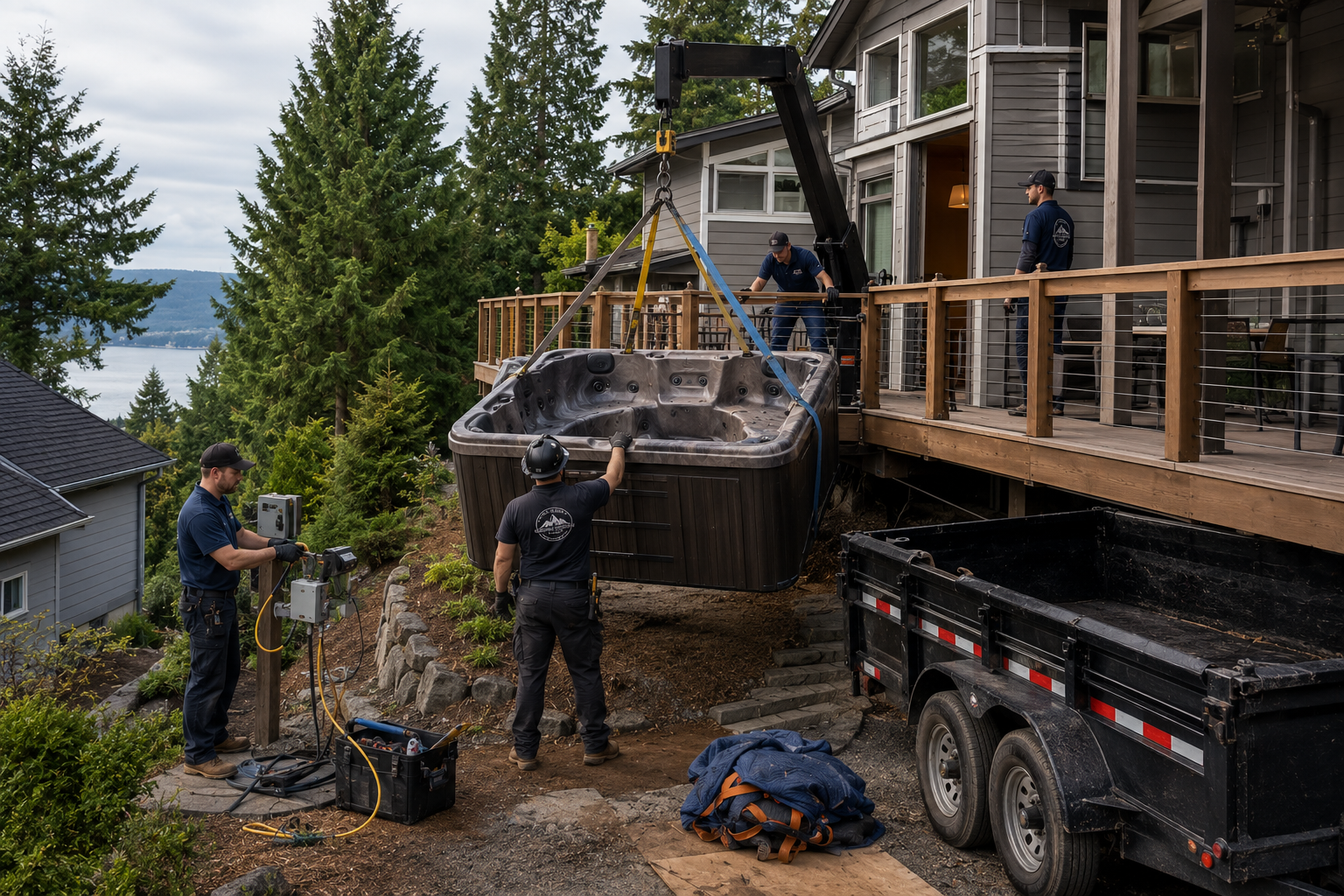
There's nothing wrong with choosing the DIY route, but some situations make professional help the safer and more practical option.
Calling a pro usually makes sense when:
- The tub is hardwired.
- Access is steep or narrow.
- The spa is built into a deck.
- You don't have a trailer or truck.
- You don't have help for lifting and hauling.
- You're not comfortable using demolition tools.
For homeowners in Greater Victoria and Vancouver, Eco Green Junk Solutions handles hot tub removal with full cleanup, recycling, and responsible disposal included.
If you want to learn more about the process or get a quick, no-pressure estimate, you can visit:
If you're specifically looking for Vancouver-focused guidance, our sister guide, [How to Dispose of a Hot Tub in Vancouver], covers local disposal considerations and buyer-focused information in more detail.
Frequently Asked Questions
How long does it take to remove a hot tub yourself?
For most homeowners, DIY hot tub removal takes around 4–8 hours with two people. That estimate can change pretty quickly depending on the size of the tub, how easy it is to access, and whether it needs to be cut into pieces on-site.
A freestanding hot tub sitting close to a driveway is usually much easier to deal with than one built into a deck or tucked behind fences and stairs. If you're getting rid of a hot tub for the first time, it's smart to leave yourself extra time for draining, disconnecting components, and hauling debris to the landfill or recycling facility.
Can I put hot tub pieces in a skip bin or dumpster?
Sometimes, but always check with the bin company or local waste facility first. Many places will accept cut-up hot tub sections, but some have restrictions around fibreglass or acrylic shell material.
Most tubs need to be dismantled into manageable 3–4 foot pieces before disposal. Some landfills also refuse whole shells entirely because of their size and weight. If you're planning old hot tub removal with a rented dumpster, confirm:
- accepted materials
- weight limits
- whether fibreglass disposal is allowed
- extra disposal fees
It's a quick phone call that can save you a frustrating trip later.
Do I need a permit to remove a hot tub?
Usually, you don't need a permit just to remove the hot tub itself. The bigger concern is the electrical disconnect.
Most hot tubs are connected to a hardwired 240V circuit, and that part should be handled by a licensed electrician. Depending on your municipality, disconnecting and capping the line may require a permit or inspection.
If your tub includes a heat pump system, there may also be refrigerant components that legally require certified handling. When in doubt, it's worth checking local requirements before starting demolition.
What do removal companies do with old hot tubs?
Professional removal companies typically handle the whole process from start to finish. That usually includes:
- draining the tub
- coordinating the electrical disconnect
- cutting the shell apart
- hauling debris away
- sorting recyclable materials
Many companies will recycle metal components like pumps, motors, heater elements, and copper wiring whenever possible. The shell material usually goes to an approved disposal facility, since fibreglass and acrylic can't always be recycled through standard programmes.
A good company should also be able to explain how materials are handled instead of sending everything straight to the landfill. At Eco Green Junk Solutions, we sort what can be recycled or donated whenever possible, with landfills used only as a last resort.
Is it safe to cut up a fibreglass hot tub shell yourself?
It can be safe if you use the right tools and protective gear, but it's definitely the part of the job where you want to slow down and be careful.
Cutting into a fibreglass shell creates sharp edges and airborne dust that can irritate your lungs, skin, and eyes. At a minimum, you should wear:
- safety glasses
- heavy gloves
- a dust mask or respirator
- long sleeves and work pants
A reciprocating saw with demolition blades is the most common tool for the job. Most homeowners cut the shell into sections roughly 3–4 feet wide, so they're easier to carry and load. If the tub is in a tight space or on an elevated deck, removing an old hot tub can be much more physically demanding than people expect.
How much does professional hot tub removal typically cost?
Professional pricing varies quite a bit because every setup is different. The biggest cost factors are usually:
- tub size and weight
- stairs or steep access
- gate width
- distance from the road
- whether the tub is already disconnected or partially dismantled
A simple backyard removal with easy truck access is obviously quicker than cutting apart a large tub built into a deck surround. Some companies also include recycling, dump fees, and cleanup in the quote, while others charge separately.
If you're comparing DIY vs professional removal, remember to factor in trailer rental, disposal fees, tool purchases, and a full day of physical labour, not just the removal quote itself.
Getting rid of an old hot tub usually goes much more smoothly when you know what you're dealing with ahead of time, from electrical disconnects to access paths and disposal rules. If you're in Greater Victoria or Vancouver and want help figuring out the best next step, Eco Green Junk Solutions is always happy to talk things through and give you a quick, no-pressure estimate.